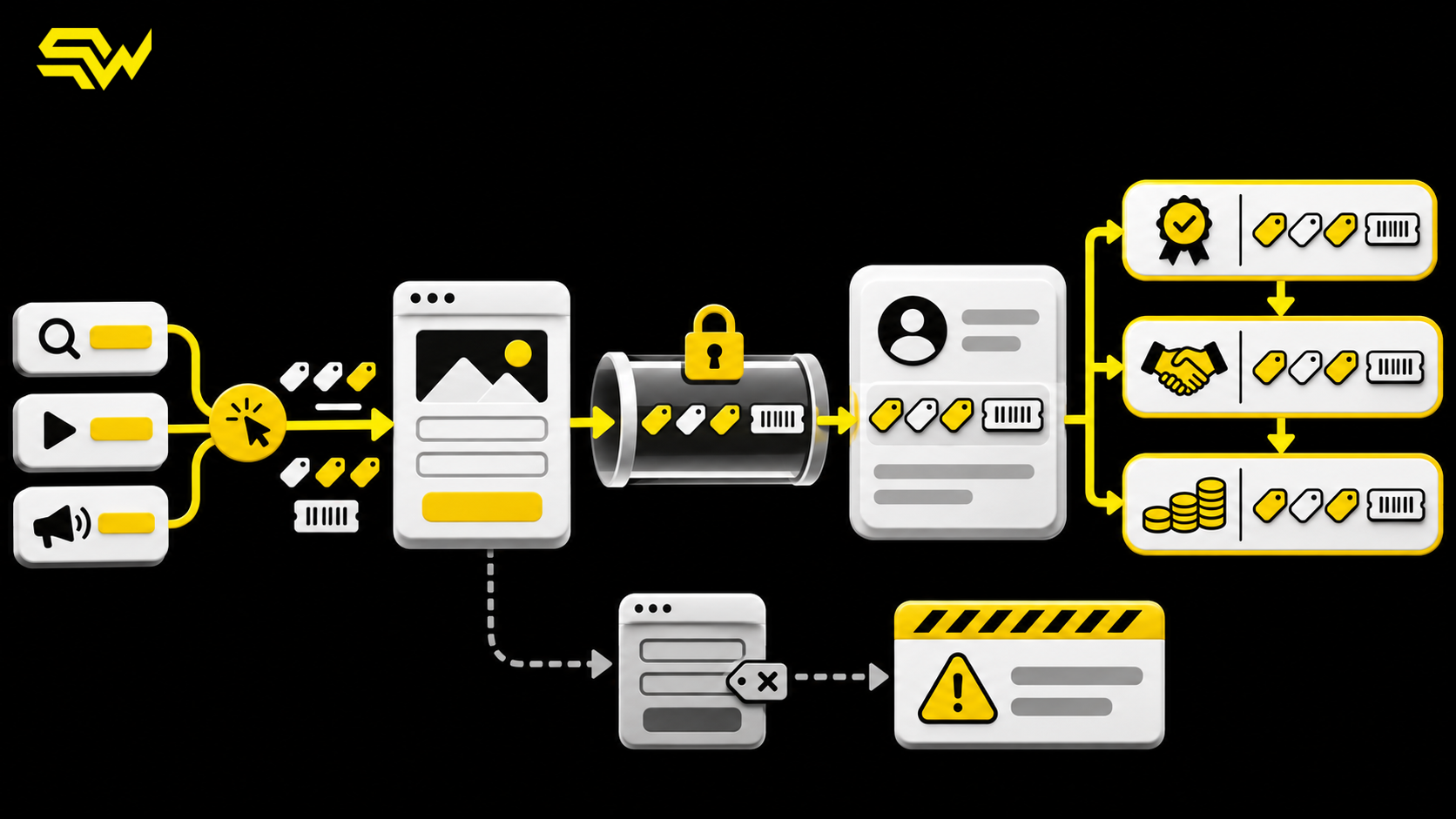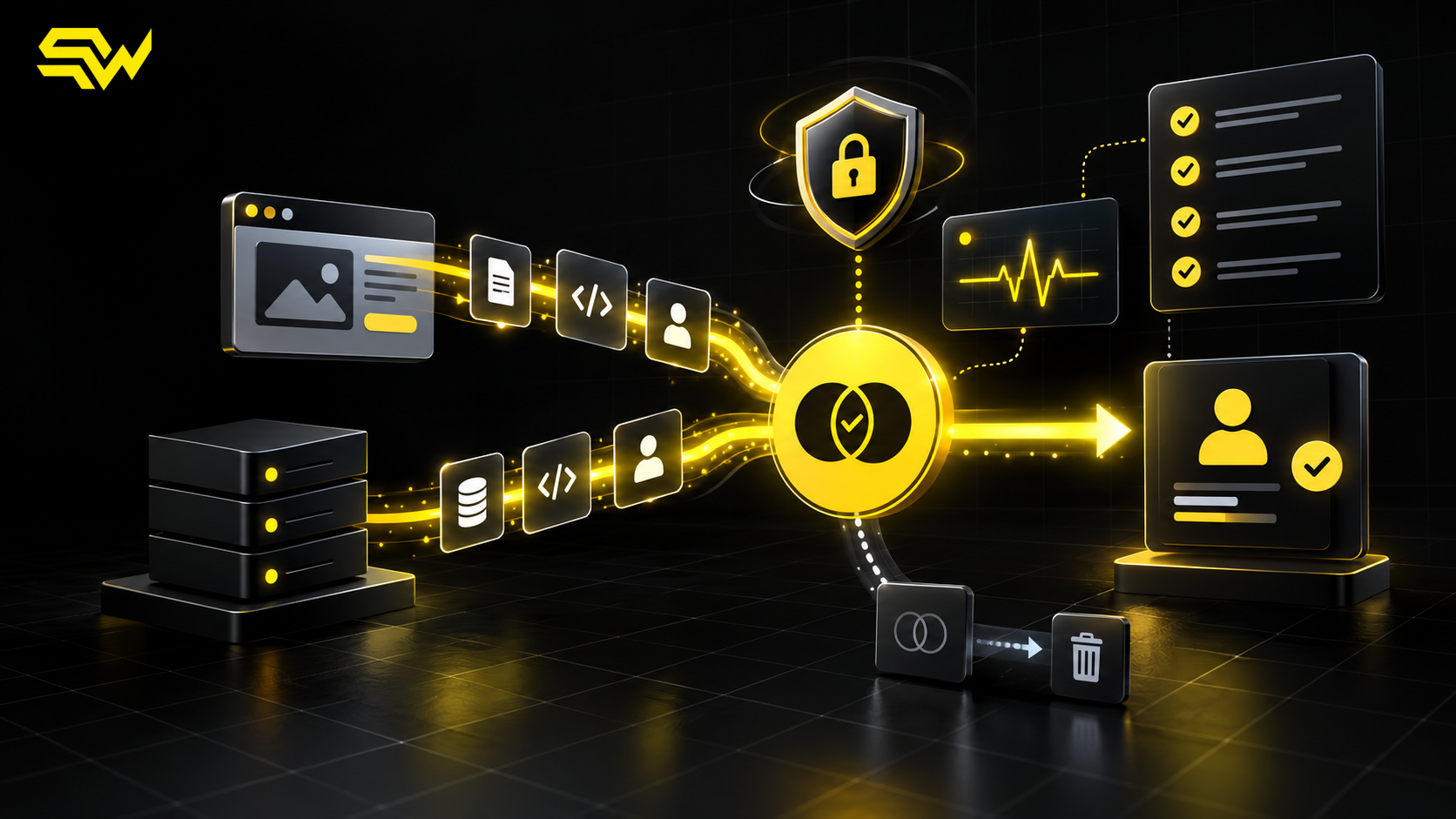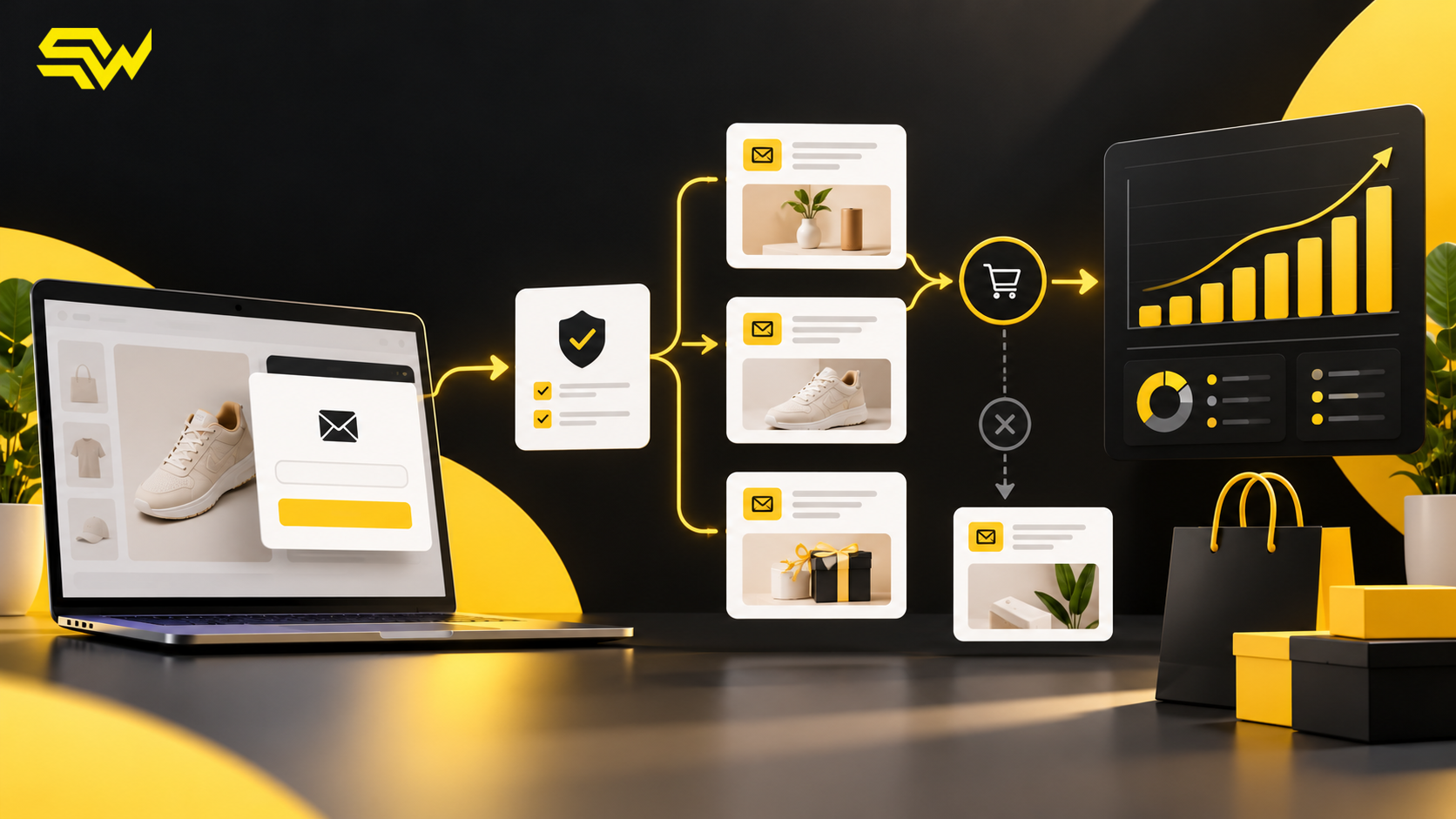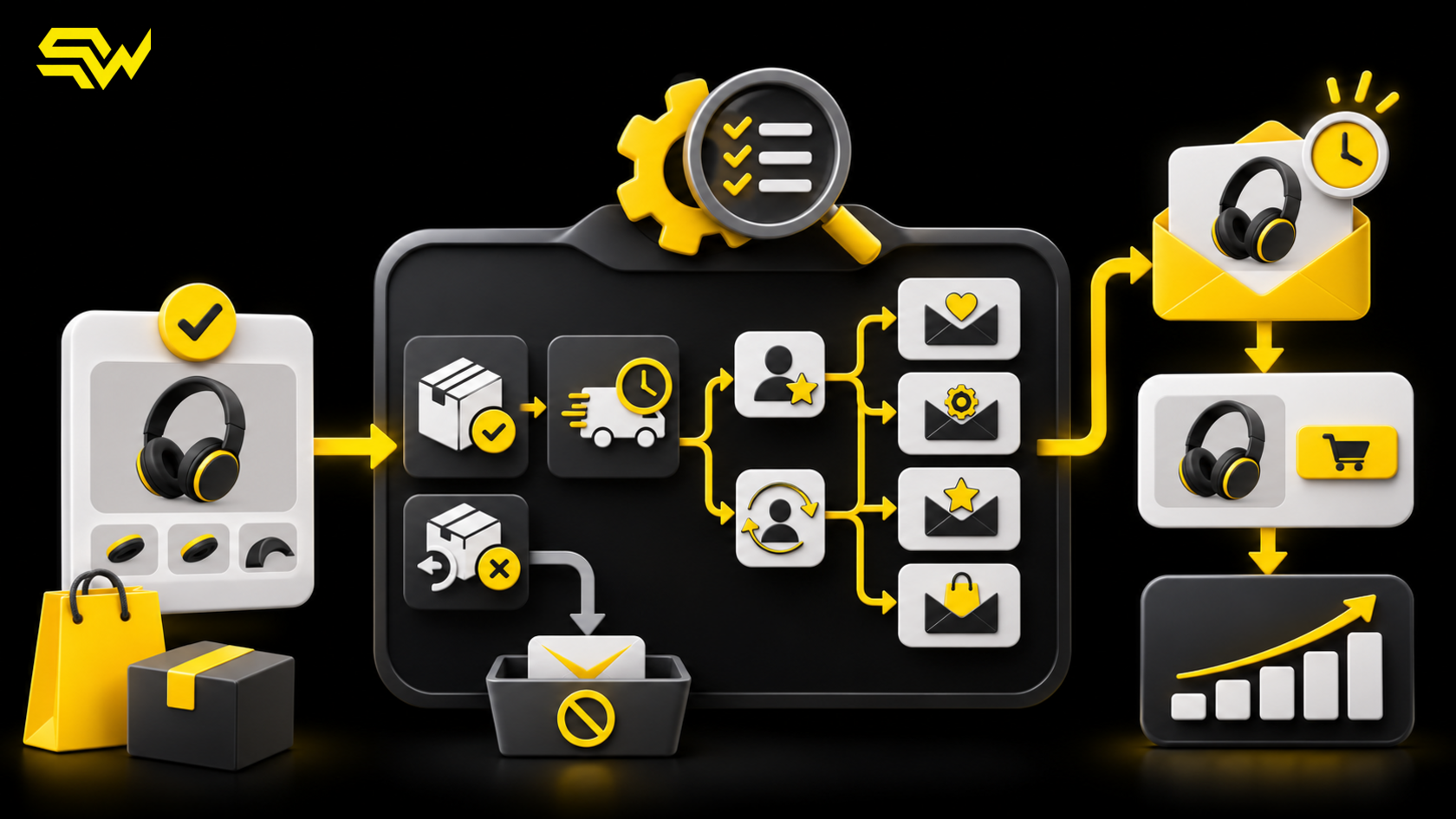
Many Shopify stores have a Klaviyo post-purchase flow that is technically “live” but commercially weak. The messages may arrive before the order ships, treat a repeat buyer like a first-time customer, ask for a review before delivery, or continue selling after a cancellation. Each email can look polished while the customer journey feels disconnected.
A useful audit starts with the order data and customer state—not subject lines. The goal is to send the right kind of message at a moment the customer can act on it, then measure whether the program supports retention without confusing attribution.
Start with the event that matches the message
Klaviyo’s current Shopify integration can sync events including Placed Order, Ordered Product, Fulfilled Order, Fulfilled Partial Order, Canceled Order and Refunded Order. According to Klaviyo’s Shopify data reference, Placed Order fires when checkout creates an order, while Fulfilled Order reflects fulfillment data. That distinction should determine the flow trigger.
Evidence: what the platform events mean
Klaviyo generally recommends Placed Order for a broad post-purchase flow. Its post-purchase flow guide also recommends using time delays for reviews, cross-sells and upsells, while a simple thank-you can be sent without a delay. For troubleshooting, Klaviyo explains that Placed Order and Fulfilled Order occur at different stages: order creation versus shipment or completion.
Recommendation: match the trigger to customer reality
Use Placed Order for a prompt brand thank-you, setting expectations and relevant preparation information. Use Fulfilled Order—or fulfillment-based splits—for shipping-related education, delivery preparation and later review timing.
Do not assume Fulfilled Order always means a parcel physically left the warehouse. Klaviyo warns that Shopify stores using automatic fulfillment may mark an order fulfilled when payment is captured. Audit a sample of real orders and compare the event timestamp with the carrier handoff before building delays around it.
Separate transactional updates from marketing
Order confirmations, receipts and status notices serve a different purpose from product education, review requests and cross-sells. Klaviyo’s transactional email guidance says transactional messages should not contain marketing content. Shopify’s customer contact guidance also says promotional content should be sent only to customers who agreed to receive marketing communications.
For US stores, consent, suppression and message classification still require store-specific legal review. Platform settings are operational controls, not legal advice. A practical build keeps true order communications in approved transactional templates and puts promotional follow-up in consent-aware marketing branches.
Build customer branches before adding more emails
A single post-purchase sequence usually ignores the information that matters most. Klaviyo’s guide suggests splitting first-time from returning customers, including with a Placed Order count of one over all time, and considering order value.
For most stores, the first useful branches are:
- First order versus repeat order
- Product or collection purchased
- High-consideration versus replenishable product
- Order value or margin tier
- Fulfilled, partially fulfilled, canceled or refunded status
A first-time buyer may need reassurance, setup instructions and a concise introduction to support. A returning buyer does not need the same welcome. They may benefit from replenishment timing, complementary products or loyalty information. Product-level branching also prevents a buyer from receiving a cross-sell for an item already in the order.
If your welcome program needs similar cleanup, use the Klaviyo welcome flow audit. If cart recovery is colliding with order follow-up, review the Shopify and Klaviyo abandoned-cart audit alongside this one.
Time messages around use, not a generic calendar
The correct delay depends on fulfillment speed, delivery range and how soon the product becomes useful. A fixed “three days after purchase” review request may reach one buyer before delivery and another before they have enough experience to answer honestly.
Use a timing map for each major product group:
- Immediately after purchase: brand thank-you, expectations and support route.
- Before arrival: setup, sizing, care or preparation content when it reduces friction.
- After likely delivery: usage tips and support check-in.
- After meaningful use: review request.
- After demonstrated value: relevant replenishment or complementary offer.
This is a recommendation, not a universal platform rule. Validate the delays against actual fulfillment and delivery data. For partial shipments, decide whether education should follow the first item, the relevant item or the complete order.
Add exit logic for cancellations, refunds and channel overlap
Every promotional branch should answer: “What event makes this message inappropriate?” A cancellation before fulfillment should stop delivery-preparation content. A refund may require support rather than a product review. Partial fulfillment may require item-specific handling.
Also check whether the customer can enter a welcome flow, abandoned-cart flow and post-purchase flow within the same short window. Klaviyo recommends considering overlap and using Smart Sending where it fits. Smart Sending can reduce frequency, but it cannot repair the wrong trigger, missing filter or poor branch logic.
Create a test matrix using first-time, repeat, canceled, refunded, partially fulfilled and non-consented profiles. Record the expected entry, split, delay, email and exit for each scenario. Then run controlled test orders rather than relying only on the visual flow builder.
Measure repeat purchases without overstating the result
Flow revenue is useful operationally, but it is not automatically incremental revenue. A customer who bought again after an email might have returned without it. Discounts, refunds, returns and gross margin can also change the apparent value of a sequence.
At minimum, review:
- Delivered, bounced and unsubscribed messages by branch
- Clicks to the intended product or support page
- Repeat-purchase rate and time to second order by cohort
- Revenue net of discounts, refunds and returns when available
- Holdout or controlled-test results for mature, high-volume flows
Make sure purchase and refund events are trustworthy before using them as success metrics. The GA4 ecommerce tracking audit provides a broader measurement checklist for transaction IDs, item data, duplicate purchases and refunds.
A practical post-purchase audit order
Audit in this sequence: event accuracy, consent and message type, entry filters, customer branches, timing, cancellation and refund exits, channel overlap, then measurement. That order prevents teams from optimizing copy inside a structurally wrong automation.
SW SOFTTECH’s CRM and email automation service can help map the customer journey, rebuild flow logic and connect reporting to real business decisions. You can also use the free marketing action-plan builder to identify three priority improvements, recommended channels and practical next steps, then include a free consultation. To discuss a Klaviyo post-purchase flow audit for your Shopify store, contact SW SOFTTECH.