A Shopify welcome flow should do more than deliver a coupon. It should confirm that a subscriber asked to hear from you, explain why your store is worth attention, guide the next useful action and stop treating someone like a prospect after they buy.
That makes a Klaviyo welcome flow audit commercially useful for US eCommerce brands. The question is not simply, “Are emails sending?” It is, “Are the right people receiving the right sequence—and can we tell whether it contributes to profitable first purchases?”
This checklist separates documented platform behavior from practical recommendations, so you can improve the system without mistaking a generic template for a strategy.
1. Audit the signup source and consent path first
Start at the form, not the email designer. Identify every entry point: Klaviyo popup, Shopify theme footer, landing page, checkout opt-in and any API-connected form. Submit each one with a test address and confirm the profile reaches the exact list that triggers the welcome flow.
Klaviyo documents that a standard welcome series is list-triggered. With double opt-in, the person signs up, receives a confirmation, joins the list only after confirming and then enters the series. Klaviyo also recommends keeping double opt-in enabled for a main list because it helps validate addresses and protect deliverability. See Klaviyo’s current guidance on creating an email welcome series and the double opt-in process.
The practical audit is therefore:
- Does the form state what the subscriber will receive?
- Does it collect email consent separately from SMS consent?
- Does the confirmation page match the offer shown on the form?
- Does the subscriber reach the intended list and flow after confirmation?
- Are bot protection and mobile display checked before the form goes live?
One important limitation: a profile existing in Klaviyo does not by itself prove marketing consent. Review the consent status and source, particularly for migrated lists, partner leads or offline uploads. Also pause or review the flow before a bulk import; Klaviyo warns that imported contacts can otherwise be scheduled into a live welcome series.
2. Map the customer journey before rewriting messages
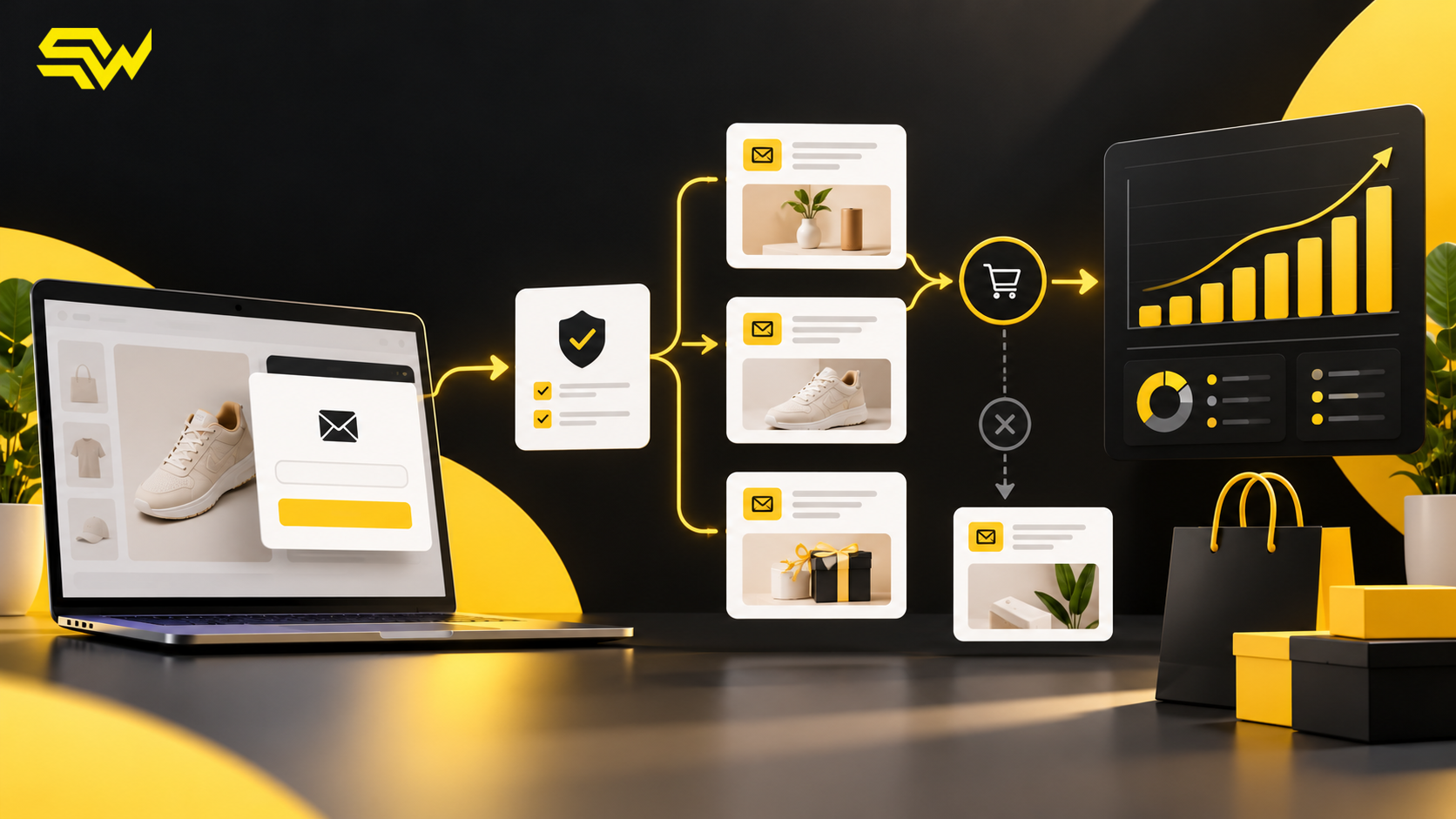
Draw the intended path in plain language: signup, confirmation, first email, product discovery, purchase or no purchase. Then compare it with the actual flow.
The platform evidence is straightforward: Klaviyo flows can use time delays, conditional splits and filters, and a list-triggered contact generally enters that flow once. The recommendation is to give each message one job and each branch a reason to exist.
A sensible starting sequence
For many Shopify stores, a three-message sequence over roughly one week is a useful baseline, not a universal rule:
- Deliver the promise immediately. Provide the stated incentive or resource, set expectations and link to one clear shopping path.
- Reduce purchase uncertainty. Explain product selection, fit, materials, shipping or another issue that commonly delays a first order.
- Present a next-best reason to act. Feature a focused collection, buying guide or time-bound reminder that reflects the original signup promise.
Klaviyo’s prebuilt example also uses three emails over about a week, but the company explicitly recommends testing because audiences differ. A high-consideration product may need more education; a replenishable item may benefit from a shorter path. Avoid stretching the flow simply to create more sends.
3. Exclude purchasers and control discount logic
A frequent welcome-flow mistake is sending a first-purchase discount after the customer has already ordered. It is confusing for the buyer and can give away margin unnecessarily.
Before every promotion, inspect the purchase branch. Klaviyo describes two relevant options: split based on whether someone has ever placed an order, or check whether the person has placed an order since starting the flow. The second check is useful before a later coupon because recent buyers can take a post-purchase path while nonbuyers receive the offer.
Treat discounting as a business decision, not a default automation setting. If your store already converts new subscribers through product education, test that against an incentive. When discounts are used, check code validity, expiration language, exclusions and the mobile checkout experience. A flow that increases attributed revenue can still be a poor trade if it trains full-price buyers to wait or reduces contribution margin.
4. Test forms and messages as one system
Review the signup form alongside the welcome flow. Klaviyo’s signup-form guidance recommends confirming the integration, choosing the form goal, setting audience and URL targeting, previewing desktop and mobile versions, and testing before publication.
For a US home-goods store, for example, a generic “Join our newsletter” popup might become a choice-led form: “Get the small-space buying guide and product updates.” The first email delivers the guide, the second explains measurements and materials, and the third points to a compact-living collection. Someone who purchases after email one exits the prospect promotion and enters the store’s appropriate customer journey.
This is a hypothetical example, not a performance claim. Its value is structural: the signup promise, content and shopping path all match.
5. Protect deliverability and meet basic US requirements
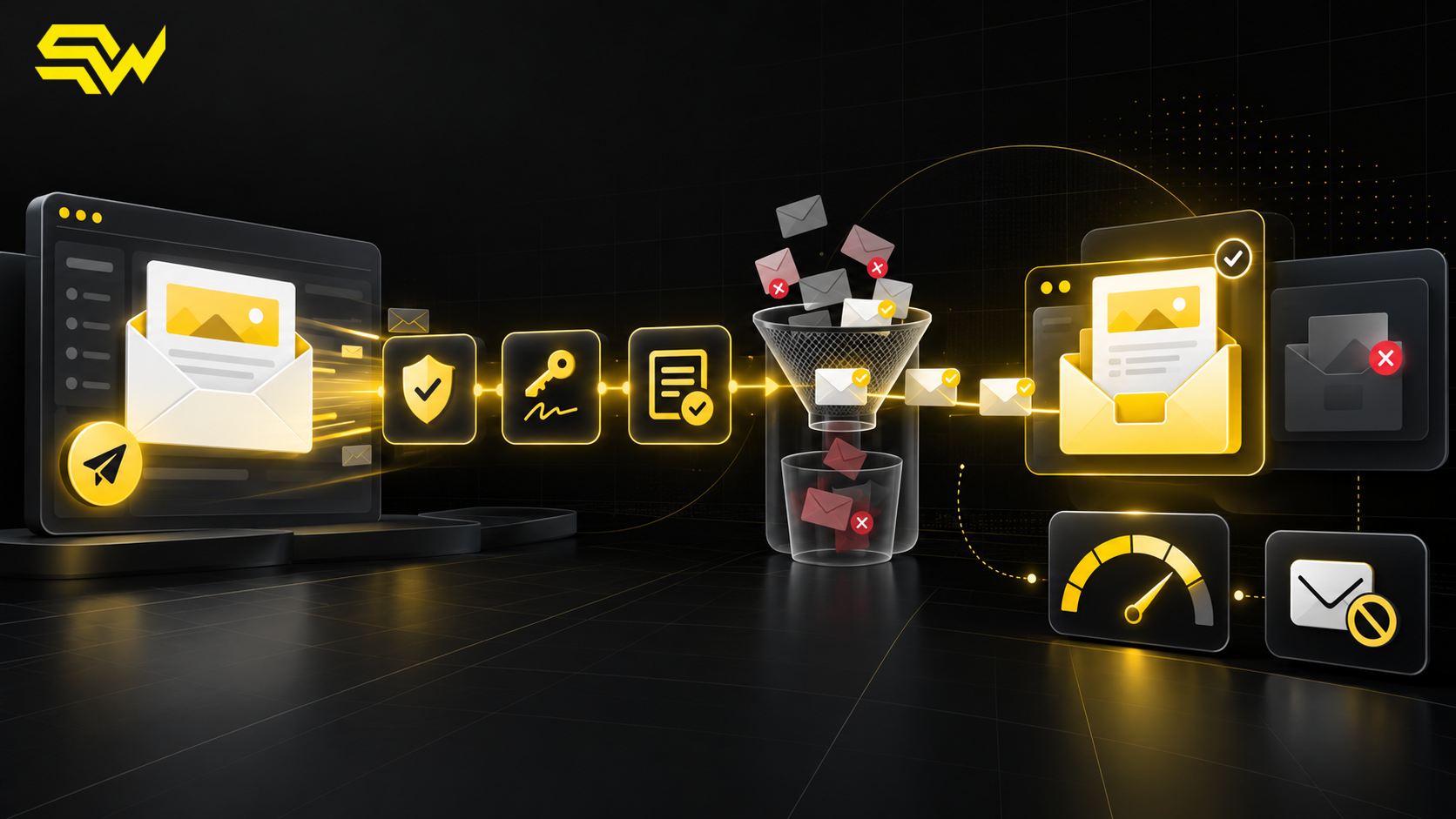
Welcome emails cannot help if authentication, list quality or complaint rates undermine delivery. Review the sending domain, authentication and suppression behavior as part of the same audit. Our email deliverability audit guide explains how SPF, DKIM and DMARC fit together.
For US commercial email, the FTC’s CAN-SPAM compliance guide says senders must use accurate header and subject information, identify an advertisement where applicable, include a valid physical postal address, provide a clear opt-out method and honor opt-out requests. This article is operational guidance, not legal advice; seek counsel for your specific business, audience and states served.
Email and SMS should not be treated as interchangeable permissions. Klaviyo recommends separate welcome flows because people may subscribe to each channel at different times. Review federal and state requirements before using automated text messages.
6. Measure first-purchase quality, not just opens
Open rate can help diagnose broad changes, but privacy features make it an imperfect business outcome. Build a weekly view that includes delivered volume, bounce rate, spam complaints, unsubscribes, clicks, placed orders, conversion lag, discount cost and revenue per delivered recipient.
Also compare the platform’s attributed results with Shopify orders and your margin assumptions. Attribution is a decision aid, not proof that an email caused a sale. Where feasible, use Klaviyo’s flow A/B testing to change one variable at a time—such as delay, offer or message angle—and let the test run long enough to include normal purchase lag.
If cart recovery is the larger gap, use our separate Shopify Klaviyo abandoned-cart audit. A welcome flow serves new subscribers; an abandoned-cart flow responds to a different behavior and should have different timing, exclusions and intent.
A practical 30-day audit order
In week one, test every signup source and document consent, list routing and broken handoffs. In week two, add purchase exclusions, confirm coupon logic and repair mobile rendering. In week three, align each email with one customer question and verify sending-domain health. In week four, establish a baseline dashboard and launch one controlled test.
The takeaway is simple: improve the plumbing before polishing subject lines. Consent, routing, exclusions and measurement determine whether creative optimization has a fair chance to work.
For a broader view, build SW SOFTTECH’s free marketing action plan to identify three priority improvements, recommended channels and practical next steps, with a free consultation option.
If you want help auditing your Shopify and Klaviyo setup, tightening the welcome journey and measuring first-purchase performance, discuss email marketing and CRM automation with SW SOFTTECH.