A win-back flow should contact a customer after their normal buying window has passed—not because a template says 75 or 180 days. Send too early and the message competes with post-purchase communication. Send too late and the customer may already have moved to another brand. Keep sending after a repeat order and the automation becomes visibly careless.
For US Shopify brands, the practical takeaway is to build the flow around buying-cycle evidence: trigger it from a completed order, wait slightly longer than the relevant reorder cycle, exclude anyone who purchases again, control message frequency and measure verified repeat orders rather than email clicks alone.
What Klaviyo currently recommends
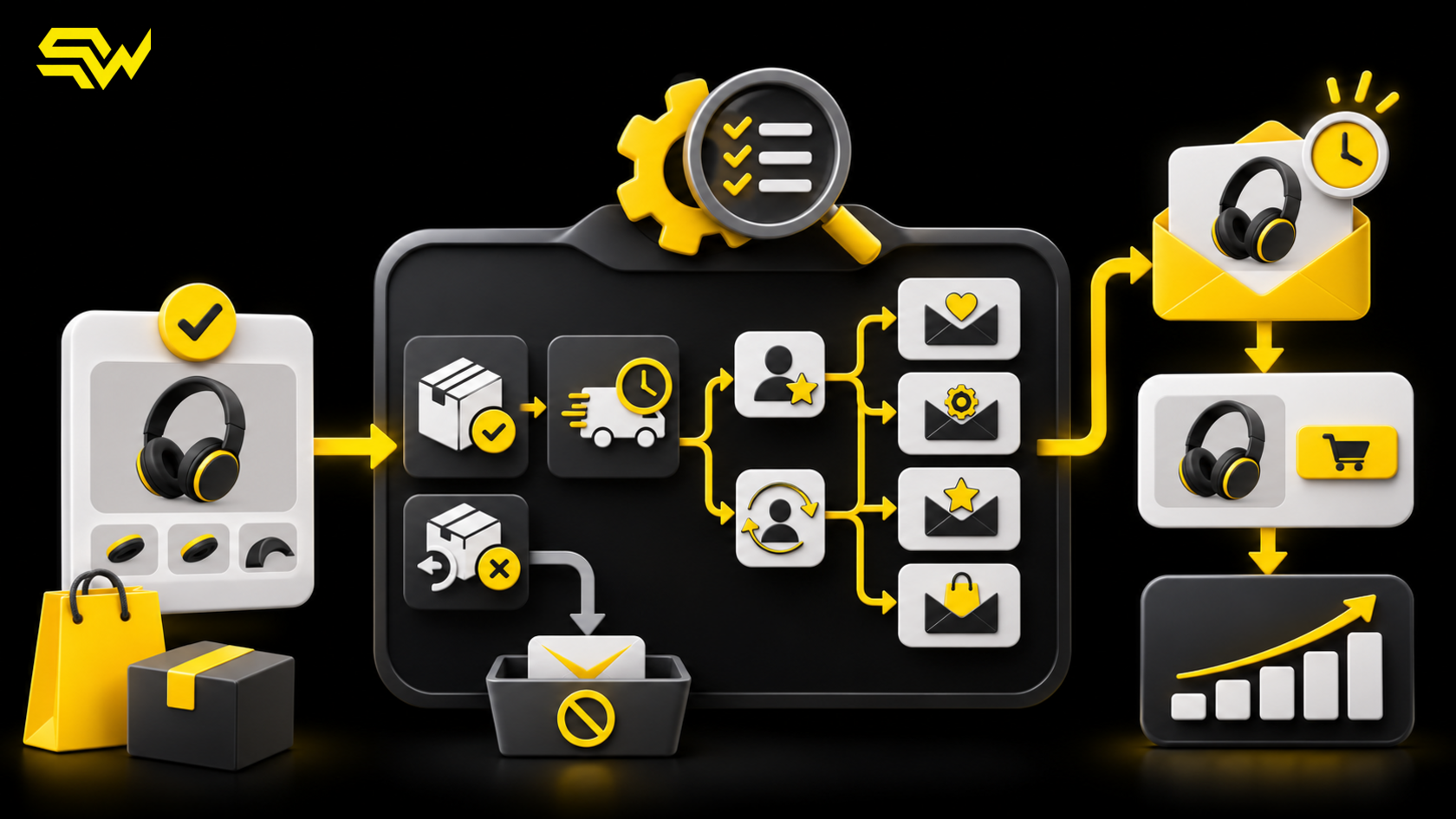
Klaviyo’s current win-back flow guide documents a Placed Order trigger, a profile filter for “Placed Order zero times since starting this flow,” and an initial delay set slightly longer than the average buying cycle. Its guidance recommends keeping the sequence to three emails per recipient.
Klaviyo’s Shopify automation interface also includes a customer win-back option with a 75-day delay. That is a starting template, not evidence that 75 days fits every product. Coffee, skincare, apparel and durable home goods have different repeat-purchase patterns.
Those are documented platform behaviors. The audit recommendations below are operating guidance; the right timing, content and offer depend on the store’s products, margins and customer behavior.
1. Confirm the purchase event and flow boundary
Start with the Shopify-to-Klaviyo data connection. A win-back flow should enter customers after a genuine order, not after checkout initiation, a page view or a test event. Check that the Placed Order event includes the order value, products, customer identity and timestamp needed for segmentation.
Then decide where win-back begins relative to other lifecycle automation. A Klaviyo post-purchase flow handles education, delivery expectations, product use and an appropriate next step soon after purchase. Win-back begins later, when the expected repeat window has passed. It should not duplicate the post-purchase series.
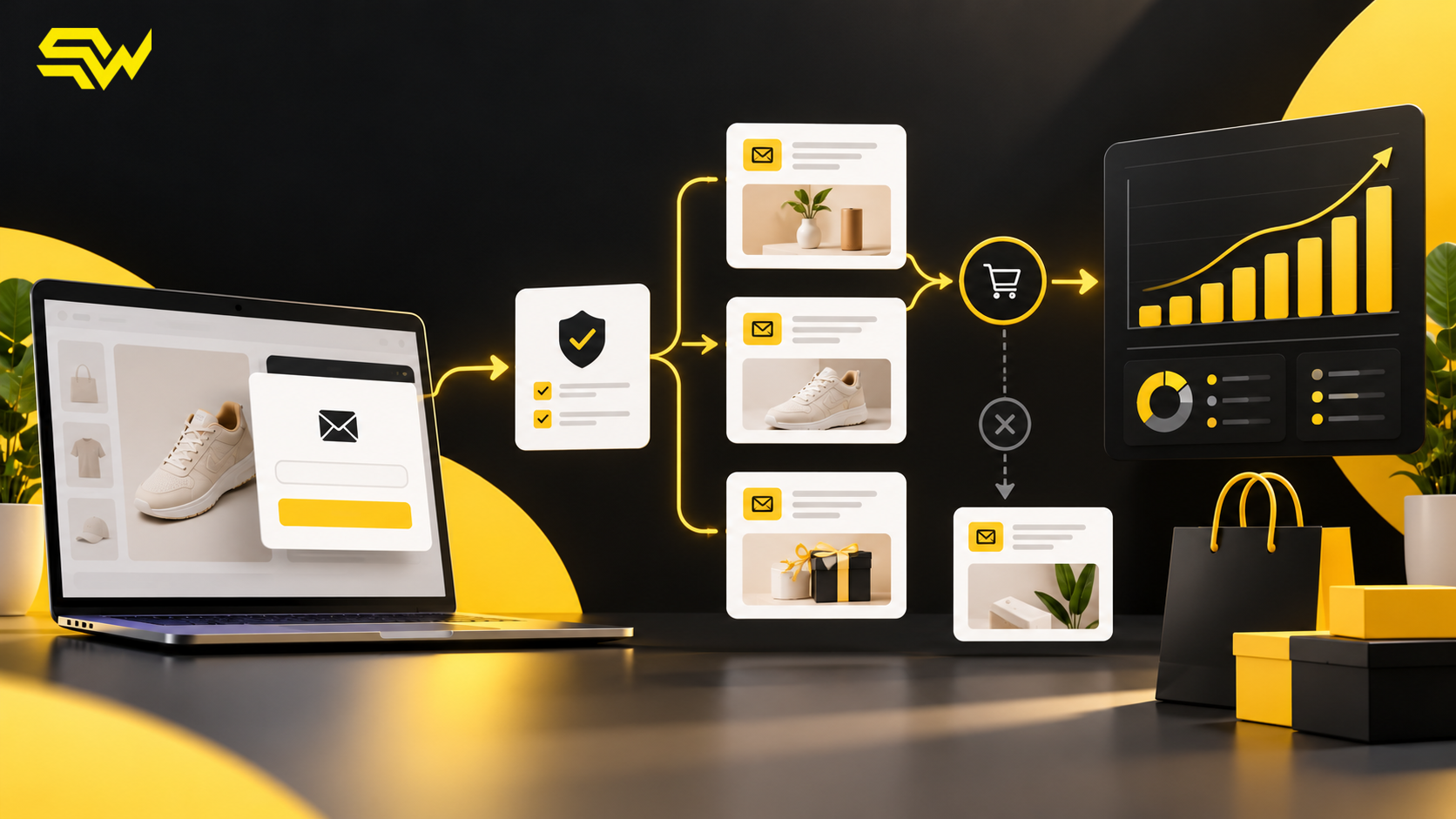
Abandoned checkout is different again: it addresses an unfinished purchase rather than a lapsed customer. Review the Shopify abandoned-cart email audit if the event logic or suppression rules overlap.
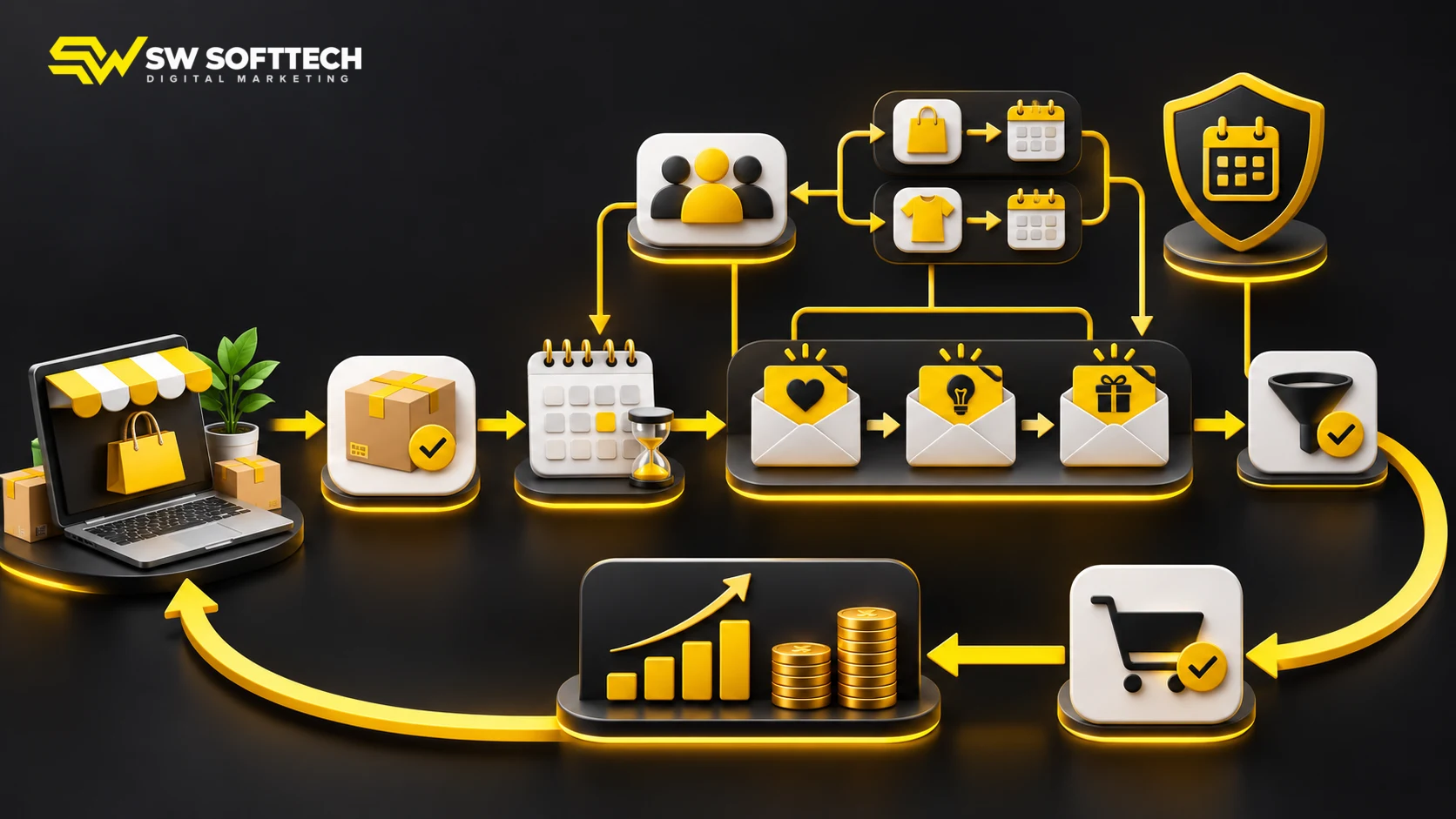
Recommendation: draw one lifecycle timeline showing post-purchase, replenishment, win-back and sunset activity. If two flows can send the same message to the same person for the same reason, the boundaries need work.
2. Calculate the delay from actual buying behavior
Use repeat customers to estimate the typical gap between orders. Klaviyo recommends creating a segment of customers with at least two purchases, exporting it and reviewing the Average Time Between Orders field when predictive analytics is available.
Suppose a US specialty-coffee store finds that repeat buyers reorder every 28 to 35 days. A first win-back email at day 75 is probably too late. A premium cookware store may see repeat purchases after many months, making a 75-day message too early and irrelevant.
Use median and distribution—not only the average—because a few very long gaps can distort the mean. Segment by product family where buying cycles differ materially. Set the first delay slightly beyond the normal window so the message recognizes genuine lapse rather than ordinary timing.
3. Know the limit of predictive timing
Klaviyo’s predictive analytics can estimate expected next-order date, churn risk, average time between orders and customer lifetime value. Its documentation also states an important limitation: expected next-order date does not consider which product a customer purchased.
That matters for a store selling both 30-day supplements and durable equipment. One predicted date may be directionally useful across customers but still be wrong for the specific product. Klaviyo recommends separate Placed Order flows with product-based trigger filters and known delays when product categories have distinct replenishment cycles.
Recommendation: use predictive signals for prioritization, not as an exact promise about one customer. If the product has a known consumption cycle, product-specific timing is often clearer.
4. Exclude customers who already returned
The critical protection is “Placed Order zero times since starting this flow.” Klaviyo checks profile filters when someone enters and again before flow actions. A customer who reorders during the delay should therefore become ineligible before the next win-back message.
Also review:
- canceled or fully refunded orders that should not start a standard retention journey;
- wholesale, employee, test and fraud profiles;
- customers in an active service or support issue;
- people without valid marketing consent; and
- Buy with Prime orders if that checkout path feeds separate events.
Klaviyo specifically advises separate handling for Buy with Prime and a filter preventing those customers from receiving incorrect messaging in the ecommerce-platform flow. Test each purchase path rather than assuming one event covers every checkout.
5. Build a restrained three-email sequence
The sequence should add reasons to return, not repeat the same coupon.
Email 1: relevance before discount
Remind the customer what has changed or what complements the previous purchase. Use product education, new arrivals, replenishment guidance or proof that reduces decision friction. Personalize from reliable order data only.
Email 2: address the likely barrier
Use a customer review, usage idea, comparison, frequently asked question or product recommendation. Place the delay before a split when the next path depends on whether the customer purchased during the wait; Klaviyo evaluates the split when the profile reaches it.
Email 3: a controlled final incentive
If margin supports it, test a time-limited incentive in the last email rather than training every former customer to wait for a discount. Exclude low-margin products and recent purchasers. Give uninterested recipients a clear way to change preferences or unsubscribe.
6. Audit Smart Sending and channel overlap
Klaviyo’s Smart Sending documentation lists default windows of 16 hours for email and 24 hours for SMS. Email, SMS and push use separate windows. Messages skipped because of Smart Sending are not automatically rescheduled.
That means Smart Sending is a frequency guard, not complete journey orchestration. A win-back email skipped after a major campaign may never arrive, while an SMS could still send the same day because its window is separate.
Recommendation: review Smart Sending on every message, coordinate the campaign calendar, and use priority rules for high-intent flows. Do not switch the protection off simply to improve send volume.
7. Measure repeat purchase, margin and fatigue
Track delivered messages, clicks and attributed revenue, but make the decision from verified repeat orders and contribution margin. Discounts, shipping, returns and product cost can turn attractive attributed revenue into weak economics.
Monitor unsubscribe, spam complaint and bounce patterns by message. Compare first-time and repeat customers, product families and incentive versus no-incentive paths. A/B tests can help compare subject lines, content or offers, but attribution is not causality. Seasonality, simultaneous campaigns and organic demand can influence the result.
For a stronger estimate of incremental value, hold out a reasonable eligible group from the flow when the audience size permits. Document the test period and avoid changing several elements at once.
A practical win-back audit checklist
- Confirm Placed Order data and every checkout path.
- Separate post-purchase, replenishment, win-back and sunset purposes.
- Calculate timing from repeat-order behavior and product cycles.
- Suppress anyone who orders after entering.
- Limit the sequence and vary the purpose of each message.
- Review Smart Sending across email, SMS and campaigns.
- Measure repeat-order margin, not clicks alone.
- Record limitations before crediting the flow with all returning revenue.
Use SW SOFTTECH’s free marketing action-plan builder to identify three priority improvements, recommended channels and practical next steps, plus a free consultation. If you want help auditing Shopify events, win-back timing, suppression logic and repeat-purchase measurement, explore our CRM and email automation service and contact SW SOFTTECH to discuss a focused Klaviyo retention review.