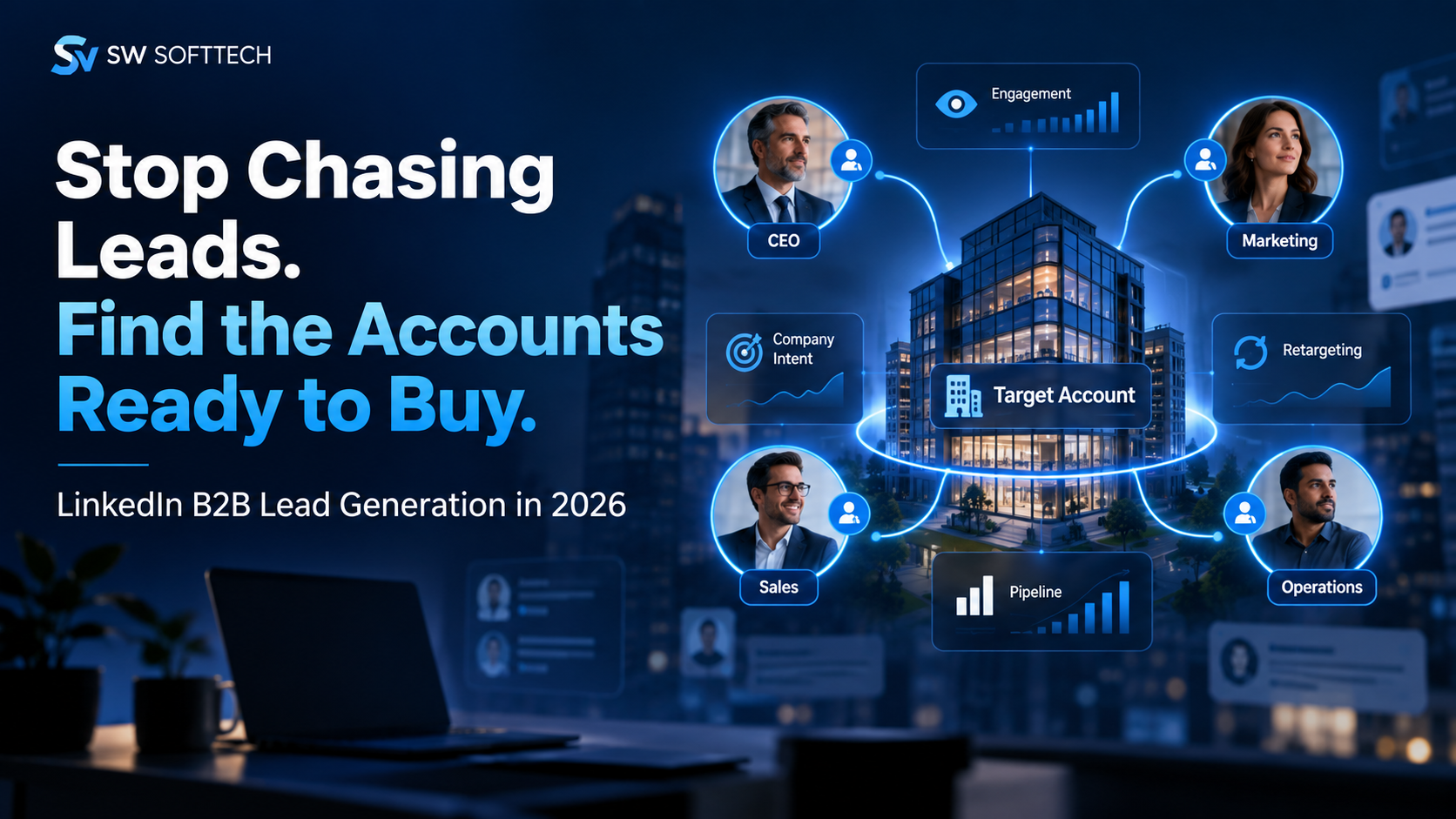
A company doesn't buy your product.
A group of people inside the company does.
That sounds obvious.
But a surprising amount of B2B lead generation is still measured as though every decision is made by one person.
Marketing generates one lead.
The CRM creates one contact.
Sales follows up with one person.
If that person doesn't respond, the account often disappears.
LinkedIn's latest B2B advertising tools are pushing marketers toward a different model:
- look at engagement across the entire company.
That could significantly improve how B2B businesses approach LinkedIn lead generation.
- B2B Buying Decisions Involve Multiple People
LinkedIn's September 2026 guidance cites research suggesting modern B2B buying groups can involve numerous internal and external participants.
Its main point is straightforward:
- one individual lead rarely tells you the whole story.
Imagine this pattern:
- A Marketing Director watches your video.
- Two weeks later, the company's Head of Sales visits your website.
- Then an Operations Manager downloads a guide.
Finally, the CEO sees a LinkedIn ad.
Individually, none of these actions may look particularly exciting.
Together, they show something more important:
- the company is paying attention.
What Is Account-Level Engagement?
- Account-level engagement looks at the combined behavior of multiple people associated with the same business.
Instead of asking:
“Did this person convert?”
you ask:
“Is this company showing increasing interest?”
Signals could include:
- ad engagement
- video views
- website visits
- content downloads
- lead-form submissions
- LinkedIn Page activity
- CRM activity
- sales conversations
The goal is to identify companies moving from awareness toward active consideration.
LinkedIn Is Making This Easier
In September 2026, LinkedIn highlighted its Companies capabilities as a way for advertisers to identify high-engagement organizations and use those signals for campaign targeting and measurement.
Its recommended process is essentially:
- identify the companies engaging with your business
- build audiences from those accounts
- prioritize advertising and sales efforts
- measure whether engagement becomes pipeline
This connects naturally with Account-Based Marketing.
What Is Account-Based Marketing?
Account-Based Marketing—or ABM—is a B2B strategy where marketing and sales focus resources on specific high-value companies rather than treating every lead equally.
Example:
A software company sells contracts worth $50,000 per year.
Running broad ads to thousands of unrelated businesses may generate many low-value leads.
An ABM strategy could instead target:
- 500 qualified companies
- specific industries
- specific company sizes
- specific geographic regions
- relevant buying roles
Then marketing and sales coordinate around those accounts.
LinkedIn is particularly suitable for this because of its professional company and job-role data.
LinkedIn Ads + Sales Navigator Can Work Together
A strong B2B strategy doesn't need to choose between paid advertising and outbound prospecting.
They can support each other.
For example:
Stage 1: Define the Ideal Customer Profile
Identify:
- industries
- company size
- revenue
- geography
- technology used
- growth stage
- decision-maker roles
Stage 2: Build Accounts in Sales Navigator
Create a qualified account list.
Then identify multiple relevant contacts inside each company.
Stage 3: Run LinkedIn Ads
Expose the same accounts to:
- educational content
- customer stories
- video
- reports
- webinars
- lead-generation ads
Stage 4: Begin Personalized Outreach
When relevant prospects receive a connection request or message, your company may no longer be completely unfamiliar.
They may already have seen your content or advertising.
Stage 5: Retarget Engagement
Accounts showing increasing interest can receive stronger conversion-focused messaging.
This creates a more coordinated buying journey.
Stop Sending the Same Message to Everyone
One of the biggest LinkedIn lead-generation mistakes is generic outreach.
Messages such as:
“We help companies grow. Can we schedule a quick 15-minute call?”
give the prospect almost no reason to respond.
Better outreach shows relevance.
For example:
“Noticed you're expanding your US sales team. We recently worked on a LinkedIn + CRM lead-gen structure for B2B companies targeting similar decision-makers. Curious whether outbound prospecting is part of your growth plan this quarter?”
The message:
- shows context
- explains relevance
- creates conversation
- doesn't immediately force a sales call
Personalization should not mean changing the person's first name.
It should mean changing the reason you contacted them.
Use Content Before Asking for a Meeting
B2B buyers need confidence.
Instead of immediately asking for a demo, give prospects reasons to trust your expertise.
Useful content can include:
- case studies
- benchmarks
- industry insights
- comparison guides
- checklists
- short videos
- research
- thought leadership
This is particularly useful when several members of the buying group may interact with your brand. Useful expert content can also support wider discoverability as AI search changes how buyers research businesses.
Measure Pipeline, Not Just Leads
A LinkedIn campaign generating 200 leads is not necessarily better than one generating 40.
Look deeper.
Track:
- qualified accounts
- MQLs
- SQLs
- opportunities
- meetings
- cost per qualified opportunity
- pipeline value
- customer acquisition cost
- closed revenue
The objective is not maximum form submissions.
The objective is profitable B2B growth.
The Future of LinkedIn Lead Generation Is Company-Aware
B2B marketing has spent years becoming better at targeting individuals.
The next improvement is understanding when multiple people inside the same account are moving together.
When that happens, marketing can prioritize the right companies.
Sales can focus outreach.
Advertising budgets can become more efficient.
And lead generation becomes less about collecting names and more about identifying real buying activity.